Netchex · Product Designer
HR Workflows: Automating the Employee Lifecycle
When an employee joins or leaves a company, dozens of decisions, handoffs, and deadlines must land correctly. Netchex Onboarding & Workflows was designed to bring consistency and efficiency to fragmented processes across the employee lifecycle.
Timeline
Nov. 2024 – Feb. 2026
Responsibilities
UX Research, UI Design, Journey Mapping, User Testing, Product Strategy, User Acceptance Testing
$1.5M+
ARR Expansion
15–20%
2026 Revenue Contribution
55%
Reduction in Manual Effort
100+
Monthly Support Tickets Addressed
01 · Challenge
Managing employee lifecycle events often meant leaving the product altogether.
Customer Problem
HR teams managing onboarding, promotions, and other key employee changes were forced to rely on emails, spreadsheets, and paper forms, resulting in heavy manual effort, little visibility, and no reliable audit trail.
Business Problem
The disconnected processes for employee lifecycle events became one of Netchex's largest sources of client frustration and a key driver of lost sales for over 3 years.
Legacy Gap
The existing onboarding product, NetGuide, was difficult to set up and manage, requiring customers to rely on Netchex Support to build workflows for them. It was also burdened by aging infrastructure that generated more than 100 bug tickets each month, making it increasingly difficult to maintain and evolve.
Why It Mattered
Research shows that strong onboarding programs can improve employee retention by 82% and increase productivity by 70%, helping organizations reduce the significant costs associated with employee turnover.
Source →
Legacy NetGuide Product — Administrators struggled to monitor task progression due to poor dashboard organization & control
02 · Insights
What we learned from the people doing the work.
Research surfaced consistent patterns across customer interviews and competitive analysis.
HR teams lacked visibility
No single system gave HR managers a clear view of where employees were in onboarding or change workflows at any given time.
Approval bottlenecks everywhere
Multi-step approvals — compensation, promotions, role changes — had no structured routing, leading to delays and missed steps.
Every org needed customization
Customers had wildly different workflow requirements. A rigid, one-size-fits-all solution would fail the same way NetGuide did.
Setup required hand-holding
Customers couldn't configure the legacy product themselves. Workflow setup relied heavily on support teams, creating costly overhead.
Compliance was a blind spot
Missing audit trails, inadequate privacy protections, and unreliable task tracking made it difficult for organizations to maintain compliance and confidently manage sensitive employee information.
No scheduling meant constant manual updates
Employee updates couldn't be set ahead of time, forcing teams to rely on reminders and memory. HR had to re-enter every change manually, costing time and increasing the risk of mistakes.
A fragmented new hire experience
New hires were dropped into an outdated, non-mobile-friendly onboarding hub with a disjointed task experience. There was a clear desire to modernize the experience and give employees a single, guided place to start.
Duplicate work at every organization
Because NetGuide wasn't organization-optimized, admins had to recreate the same onboarding tasks for each company in their portfolio — wasting time, creating inconsistencies, and making ongoing maintenance unscalable.
03 · Journey
From discovery to delivery.
Click any card to explore the artifacts and thinking behind each phase.

Research
Customer Interviews
In-depth sessions with HR admins across high-turnover industries to map current processes and surface pain points.

Research
Competitive Analysis
A thorough feature comparison across leading HRIS platforms to identify must-haves and opportunities to differentiate.

Strategy
Workflow Architecture
Defining the core task system — types, assignment logic, triggers, and the key user flows the product needed to support.

Design
Rapid Prototyping
Continuous mockup cycles with stakeholders and clients to refine concepts before the official project kickoff.

Validation
Usability Testing
Structured usability sessions with HR admins to validate flows, catch friction, and pressure-test our assumptions.

Launch
Phase Planning
Iterative delivery driven by high-impact priorities and close collaboration with stakeholders.

Launch
Beta Feedback
Real-world validation with live customers during beta — measuring success against key adoption and support metrics.
04 · Solution
A centralized system for the entire employee lifecycle.
The final experience prioritizes clarity, configurability, and control for HR teams managing complex processes.
Employee Change Requests
Structured approvals for every employee update.
From promotions and compensation updates to termination requests, every employee change now flows through a structured, trackable process with configurable approval chains, flexible ownership, and automatic task assignment.
Eliminated reliance on email chains and spreadsheets for tracking critical HR decisions.

Workflow & Task Management
Configurable workflows that HR teams can own.
Unlike NetGuide, the new system is designed to be configured and managed entirely by HR administrators without relying on the support team. Flexible task types, conditional logic, and assignment rules provide the configurability organizations need, while intelligent defaults and preconfigured settings minimize manual setup and reduce administrative effort.
Empowering HR teams to self-serve and create workflows at the organization level — no more manual duplication!
Employee Onboarding Dashboard
First-day confidence for new hires and HR alike.
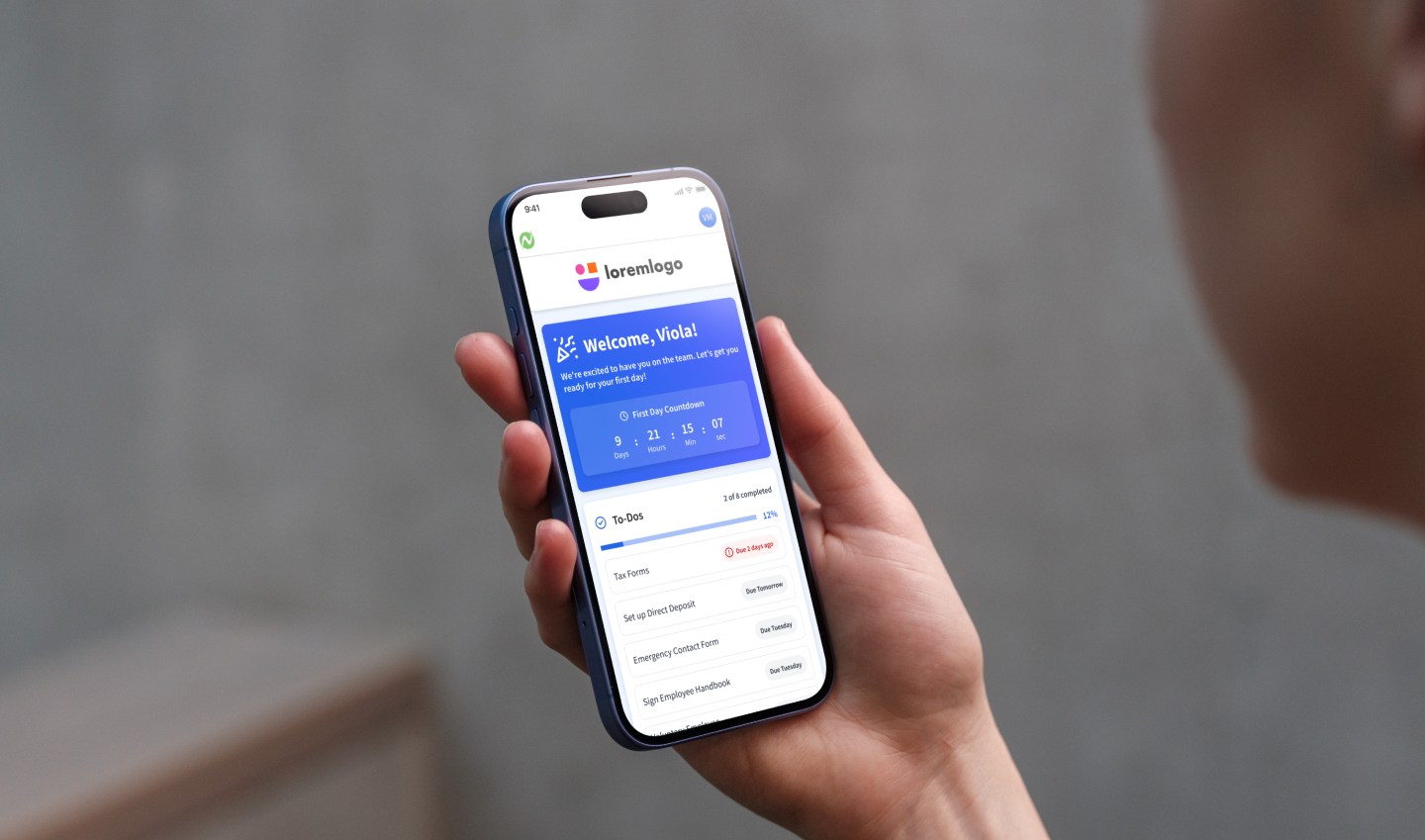
The redesigned onboarding dashboard helps new hires stay on track, connect with their company, and complete tasks seamlessly, while giving HR full visibility into onboarding progress.
Improved onboarding visibility and reduced the manual follow-up burden on HR teams during high-volume hiring periods.
05 · Impact
Results that reshaped the product roadmap.
Measured outcomes across business performance, customer experience, and competitive positioning.
$1.5M+
ARR expansion opportunity
55%
Reduction in manual effort
$500K+
Estimated annual support savings
15–20%
Projected 2026 revenue contribution
Business Impact
$200K+
Annual revenue generated during beta
$1.5M+
ARR expansion opportunity unlocked
15–20%
Projected contribution to 2026 revenue
$500K+
Estimated annual support cost savings
100+ monthly support tickets addressed
Customer Impact
55%
Reduction in manual administrative touchpoints
Improved onboarding visibility for HR teams
Reduced reliance on Netchex support for setup
Centralized employee lifecycle management in one product
Strategic Impact
Addressed the primary sales loss reason that existed for 3+ years
Improved competitive positioning against Rippling, Gusto, and BambooHR
Established the foundation for future workflow automation initiatives
Gave Sales a concrete, demonstrable story for enterprise conversations
06 · Reflection
What this project taught me.
Designing for Flexibility
Every customer had different workflow needs. The biggest design challenge wasn't the UI — it was building a system flexible enough for diverse organizations while remaining intuitive enough to configure without a support call.
Iteration Over Perfection
This project deepened my understanding of the value of iterative releases. Launching an MVP allowed real-world usage to inform priorities, uncover gaps, and guide future enhancements, ensuring we focused on what mattered most.
Design is a Team Sport
Early in the design process, I learned the importance of gathering feedback beyond just our users. Input from Sales, Development, and UI teams surfaced insights around business value, implementation, and feasibility that directly shaped stronger solutions. This cross-functional collaboration was key to bringing the designs to life.
System Thinking at Scale
This project reinforced the importance of designing systems, not screens. Rather than solving each workflow independently, I invested early in defining a reusable task architecture that could scale across employee change scenarios. This approach reduced design and engineering effort, increased consistency, and enabled the team to deliver a broader set of capabilities within tight release constraints.
Next Project